The Gold in Golden Gate

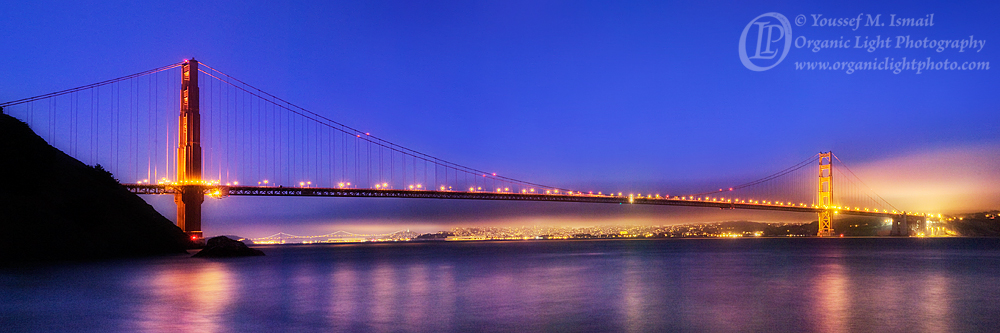
The Golden Gate at Dusk

The Golden Gate

Yesterday afternoon I had the crazy idea of making a panoramic photograph of the Golden Gate Bridge as dusk was taking over.  It is rare to find the bridge clear of fog, and last evening was just one of those nights.  I pitched the idea to my four assistants and at first they were lukewarm to the idea, as it required a little bit of a hike.  However after a little cajoling and the promise of being able to romp on a beach they have never been to before sealed the deal.

Sometimes I wonder why I bother to bring along the distractions that follow them in making sure they stay safe, but nothing is as precious as their company.

I don’t have much more to say right now, other than enjoy this photo.  Here in California, even the man made stuff looks pretty darn nice.

Peace.

P.S. I also photographed the bridge on three 4x5 transparencies which will be stitched into a panorama as well.  I’ll post it when it becomes available.

Leave a Comment: Comments (1)

In The Blink of an Eye

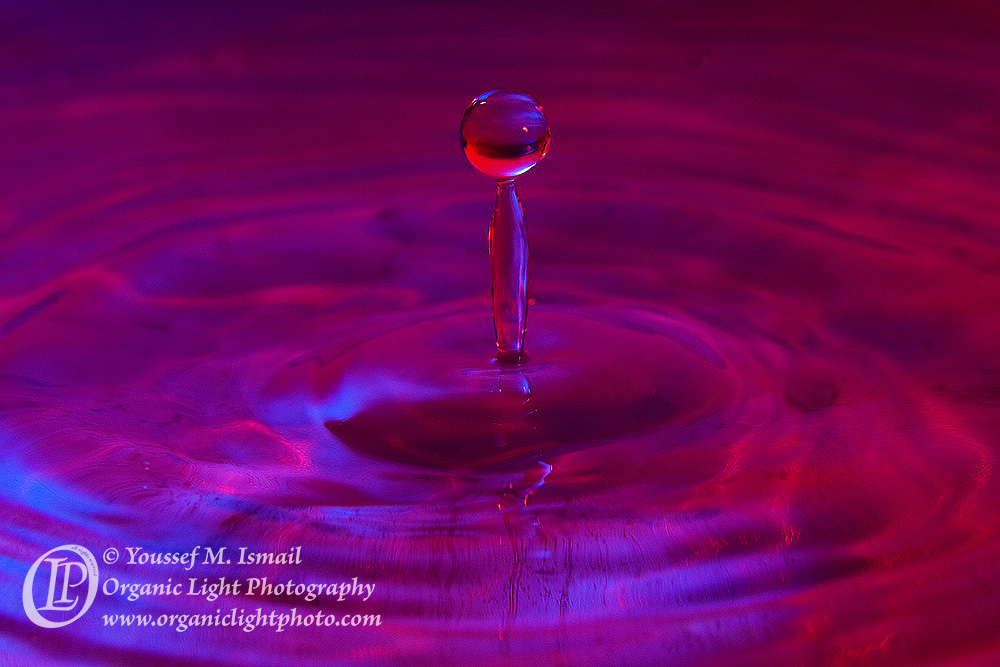
Totem Drop

Totem Drop

About two years ago I became interested in filming things using a high speed camera.  This type of a video camera takes video at very high frame rates, 300 fps and above.  At about that same time Casio introduced a consumer level camera the EX-F1 that had the capabilities of taking high speed video at 300, 600 and 1200 fps!  In addition to that, it can take full 6MP frames at 60 fps with a unique buffer system that captures the first 0.5 seconds before the shutter is tripped and the 0.5 seconds after the shutter is tripped allowing the decisive moment to be captured, almost guaranteed.  I made many short experimental videos using that camera of things to fast for our eyes to normally see.  And while it was interesting I became preoccupied by other things and set that work aside.

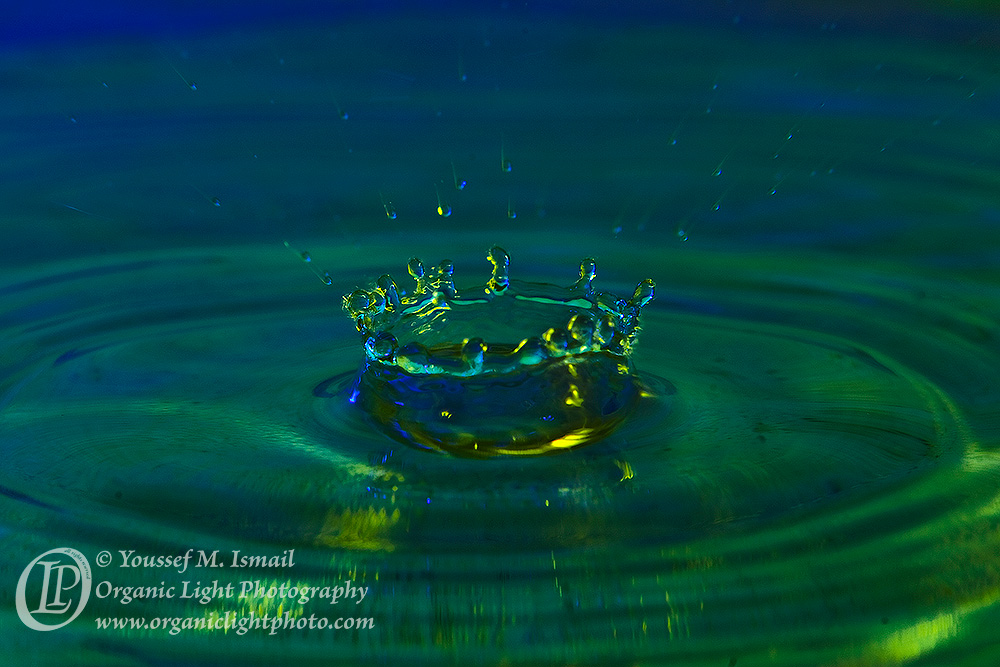
Coronet

Coronet

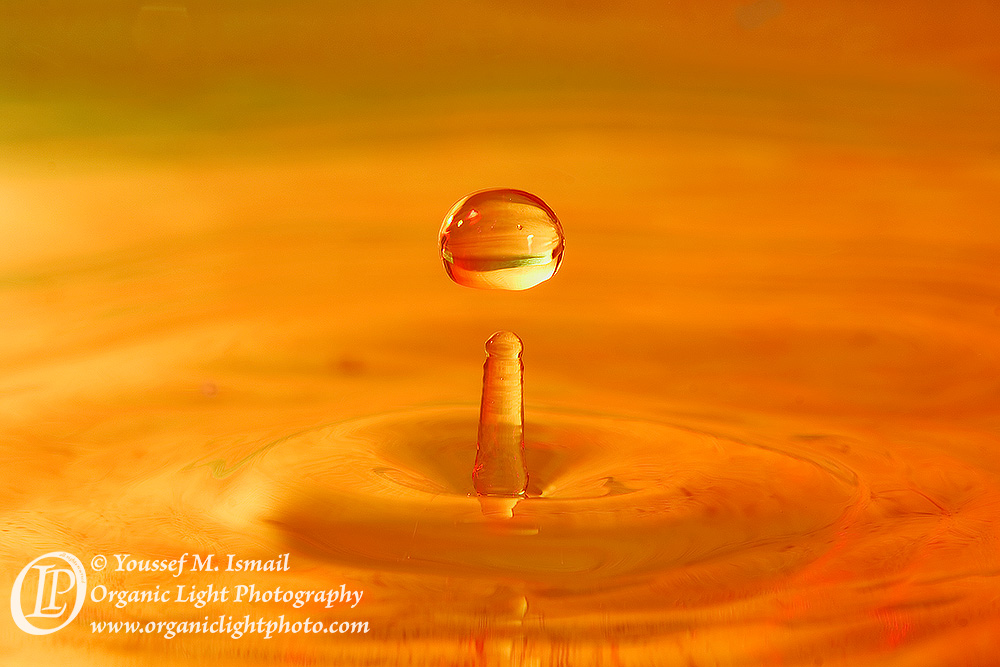
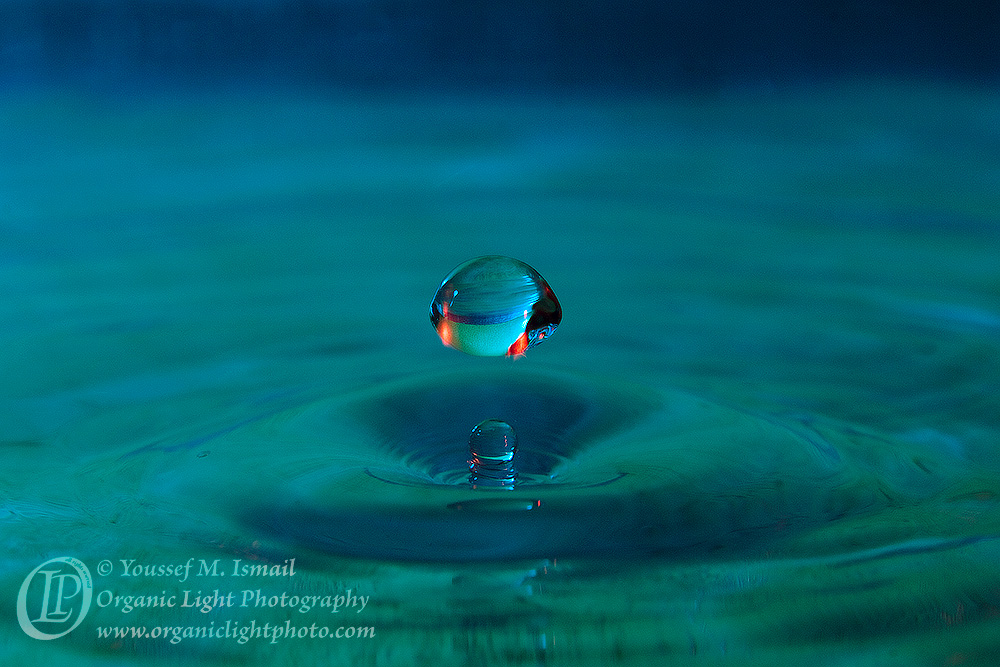
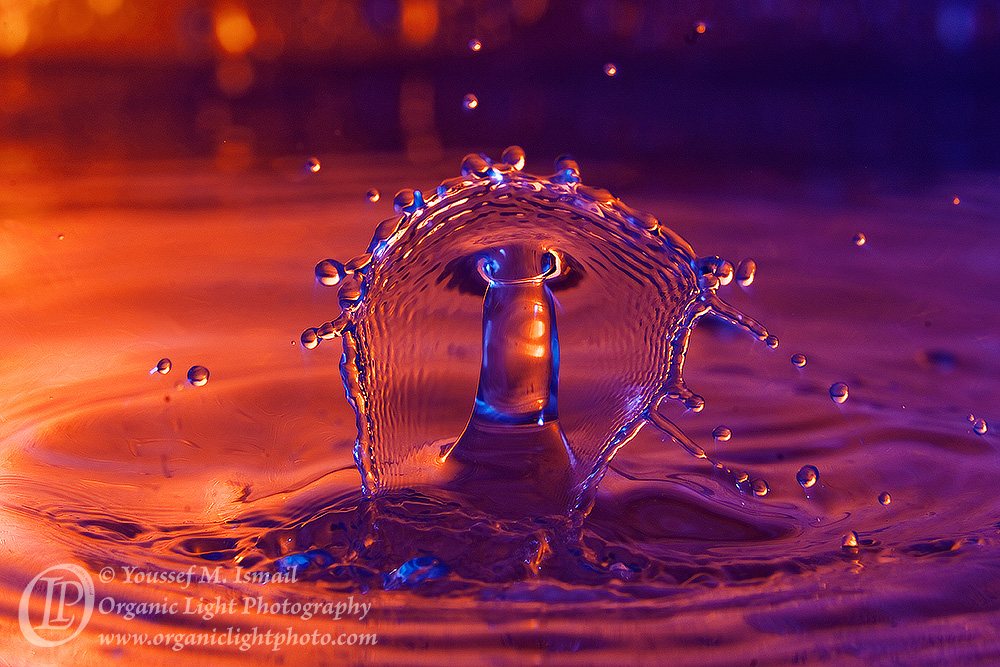
In the last few months the interest has had a resurgence.  I saw a short video segment of a Discovery Channel show titled Time Warp where they filmed water drops falling into a shallow pool of water.  It was incredibly fascinating and piqued my interest to go back and do more high speed photography.  I also have been very fascinated with the nature of water for several years and so the two desires met and I embarked on trying to photograph water drops in the midst of the interaction between the water drop and water pool.  I tried many different techniques using natural light but none were successful, forcing me to succumb to using strobe lighting in the studio.

Suspended

Suspended

Now I have nothing against using strobes, so don’t get me wrong.  Studio work is fun, but its studio work.  The added variable of changing light is gone and so is the magic, for the most part, when some great light appears illuminating the subject for that brief few moments and forcing you to work fast to capture it. Those moments bring a great sense of satisfaction.  Unlike that, studio work is more predictable and once the test photos are done and the lighting is set, its just shutter work from there on out, well almost.

Don't Blink

Don't Blink

Enter in a new variable – time, or should I say timing.  Trying to capture a water drop in the midst of its interaction with a pool of water is to say the least an activity that requires great patience and perseverance.  Once I managed to set up a working light arrangement, I spend the better part of a day watching water drops fall over and over and over and over, tripping the shutter again and again and again.  One image after another comes up missed and I would delete and delete and delete…oh wait that one is good.  In my most recent attempt I made over 500 exposures and only 20 frames captured some form of interesting interaction.

Collision

Collision

The most interesting by far is when one drop of water is rebounding as a jet or totem and a second drop collides with it.  In 500 frames I only managed to capture 4  frames with a collision.  The drip rate of the water has to be timed perfectly and only two drops can be allowed to fall otherwise the water surface become much to turbulent and chaotic.  Its definitely a challenge and one that I will keep tackling until I get something spectacular.  The quest goes on.

This crop of images was just the first round and I plan on making many more.  I am not sure what I will do with these, or if people like this kind of stuff, but it is most certainly fascinating and something that I can do almost any time I have nothing else to do, day or night, sunny or rainy.  I am still interested in making these photos using only natural light so if any of you have any ideas on how I might be able to do that, I would love to hear them.  In the mean time enjoy these and I will keep you posted.

Peace.

Leave a Comment: Comments (3)

Sparks Of Light – 7/21/11

Sometimes I get these thoughts that just come out of nowhere.  I find them interesting and think they would make a great blog post but I either don’t have the time to develop the thought or I just don’t know what else to say about it beyond that.  So I think I will just post it here as a “Spark Of Light” thought for that given day.

Leave a Comment: Comments (0)

The Gathering

Stones Gathered Together

The Gathering

Last month I ventured out with my four photo assistants to one of our local beaches to beat the heat brought on by a strange early summer heat wave.  When we arrived at the beach we found the typical summer northern California coast pattern of fog due to the upwelling that takes place along the coast this time of year.  We came donning summertime attire expecting sun and fun…oh well.  However the temperature at the coast was well into the 70′s and a bit humid due to all the fog, so even though we did not see the sun we were not worse for the wear.

This particular beach is situated about a half mile from the highway and the walk takes us across a wonderful coastal plain.  I think because of this walk, very few people make the walk out to the beach as we rarely find anyone there, this afternoon was no different, and we had the beach to ourselves.  The overcast light and foggy sky left much to be desired in the way of seascape photography and I decided to not even take my camera out.  I just walked along soaking in the full bouquet of the ocean air and reveling in the light sea spray the kissed my face.

Then one of my assistants rushed up to me gleefully and urgently trying to show me the amazing stone that they had found.  And the idea was sparked…This would make a great photo.  I instructed my assistants to find as many unusually colored, marbled, or shaped rocks as they could find.  Soon we all were wading in the surf watching for the glimmer of a hidden “gem” to make its way to the surface of all the small stones that riddled the beach.  After about two hours of searching and arranging I finally pulled out the camera and composed this photo.

It was a memorable day.  But in hindsight it was much more than that.  Many things need to come together for something great to take place.  We sometimes try to rush greatness into existence before all the necessary ingredients are present and instead we find mediocrity or worse, failure.  We also never know when an opportunity for greatness will emerge and how we need to coax it along in its emergence.  However it appears, we need to be aware of it and grab hold of the reins and lead it on to its full fruition.  If we allow it to pass us by we may never get a second chance to make it happen.  I guess this rings of the notion of carpe diem - seizing the day or living in the present.  If we can live in the moment, seizing it and living it to its fullest, then later in the future we can look back at the past and feel no regrets, no remorse, and no sorrow for not capturing, if nothing else, a memory in our heart that will be a story that lives on forever.

The Gathering, for me, was the coming together of five hearts enamored by the marvel that is our world where Earth meets Water and the special interaction that takes place between those two elements.  It was the coming together of love, wonder, effort, toil, and hope in the hearts of five individuals that gathered together on one intention of showing the world the marvel of our Mother.  In that I found a great thing.

Peace.

Oh, P.S. Which is your favorite stone?

Leave a Comment: Comments (0)

Old Cameras, New Techniques – New Cameras, No Techniques

I recently exhibited my photographs at the La Jolla Festival of the Arts in beautiful La Jolla California.  It was a pleasant show and the quality of the work of other artists was top notch.  At such venues where the show is not held on the street, the environment is more relaxed and I like to set up my 4×5 wooden field camera as part of my show display.  It really is a conversation starter and the visitors to my booth are mesmerized by the camera and then even perplexed that I actually use such an old camera.  I don’t know what shocks them more, the fact that I use it or the fact that the camera is only about 6 years old while it looks 150 years old.

The funny thing is that they think because it is an old styled camera that I photograph using wet glass plates!  I have never touched a glass plates in my life.  When I tell them I use film I get this perplexed look.  I then explain to them how the camera works.  I take off the lens attached to its lens board and show them that there is nothing inside the bellows and that a camera is nothing more than a black box with a light focusing element on one end, the lens, and a light capturing medium on the other end, the film or digital sensor.  I explain how the camera is focused by moving the lens closer or farther from the film, how the tilts and swings help in choosing the plane to focus on and how the shifts help in correcting distortions.

I then explain how I scan the films and prepare them to be printed digitally and suddenly this somehow seems incredulous to them.  I then point out that with scanning film at even moderate scan resolution I end up with raw image files that hover around 500MB and that even the highest resolution digital cameras available still only produce files that are about 240MB.  We then walk over to a large 20×25 inch photo hanging in the booth and I point out all the fine detail that is retained and then they start to see the light.

They start to understand that making a photograph is serious business and not as easy as it is made to seem with todays automatic cameras.  They comment to me that I must really be invested in a scene to haul out and use such a big camera.  They are correct of course.  They comment on how I must know a lot about light and camera operation, not to mention processing and printing techniques and again they are correct.  Even though I use an old camera, I employ many new techniques to maximize the amount of information in my photographs so that the finished image on paper is as close to how I experienced it and hopefully so that they can experience that moment as well.

When making a photograph I use a top-down / bottom-up workflow.  It starts with seeing something that moves my heart.  That is the peak of it all, the scene has to move the heart somehow for some reason sometimes beyond our understanding at the time it is seen.  From there artistic decisions about perspective, composition and lighting come into play followed by technical decisions about focusing and focal planes, apertures, light levels and shutter speed.  Only then can the shutter be tripped to capture that light.  The process does not end there however.  The latent image on the film, or RAW sensor data, then has to be developed and then printed on to paper using a myriad of techniques in either a wet darkroom or a digital darkroom on the computer.

Over the years cameras have steadily become more sophisticated while becoming easier to use and taking over many of the decisions that a photographer has to make in the photographic process.  Starting out with built-in light meters and moving to auto exposure and auto focusing.   The sophistication continued into the digital era as well and now photography is instantaneousness.  Modern technology has taken a difficult time-intensive process and has rendered it to as simple as pushing one button.  Gone are the technical decisions about how much light is available, what aperture-shutter combination to use, and to some extent where or what to focus on.  Focus, even though taken care of automatically, still only focuses exactly at only one distance from the camera, and without a proper aperture setting, important elements in the composition are rendered out of focus and hence the photo is considered “bad”.  Focusing and aperture selection were the last technical decisions that photographers still had to make as the camera had no idea what the photographer was aiming at.  So even though the modern camera was loaded with auto-everything, good technique was still important.

Enter the latest contender to simplify photography.  The Lytro camera was recently announced with the ability to capture an image and choose what to focus on afterwards entirely in software.  In other words that camera  has eliminated the need to focus or choose an aperture entirely.  Photographic technique has now been laid to rest and operating a camera has now been completely rendered to pushing a single button.  Don’t get me wrong, the technical sophistication that goes on in the background is truly amazing and the science behind it is even more fascinating, but where does that leave us as photographers?  The ability to make images is now so ubiquitous with “cameras” on almost every device imagined that the demarcation lines have been blurred between the photographer and everyone else.  Today’s cameras require no technique at all.  Just point and press a button – you can focus later, set exposure later, and mimic whatever aperture desired later.

Photography, writing with light, requires technical proficiency in understanding and working with light.  Yet the majority of  today’s “photographers” have no clue about light the very medium they work with.  They don’t need to as they have a machine that does everything for them.  I wonder what authors would think if there was a device, perhaps called a Scribbler, that produced novels at the press of a button.  Would they be as accepting as photographers are about the technique-less camera?

Fallen

Fallen

Hone your photographic technique and be that writer of light that moves the hearts of those who take the time to see what you saw and feel what you felt.  The camera cannot do that for you.

Peace.

Leave a Comment: Comments (13)

Longing For Peace

It has been difficult for me in the last several weeks.  The new moon came and went, and even though I photographed it and made a beautiful composition of it I found it difficult to post anything about it.  I have been thinking quite a bit as well, and unfortunately returned to listening to the radio news and talk shows.  I really must learn to leave that nonsense, however I sometimes need to know what is happening in our world.  Let me tell you… what you hear is very depressing, so much so that it pushes me closer to being a cynic, which is never a good thing.

From the earthquake in Japan and the resulting nuclear catastrophe to the charlatans setting up fake aid organizations duping sincere folks wanting to help to the impending world contamination with radioactive iodine and cesium, the whole thing is infuriating.  We really can’t find better ways to boil water to turn turbines to spin generators to make electricity…really?

Then there is the unfolding war in Libya that is so unfortunate.   It is very frustrating.  But hey, call it support for the freedom fighters and everyone is on board.  Never mind that the citizens of Libya had free housing and free education and health care for everyone!  Now lets drop depleted uranium munitions there as well.  Argh!  We don’t have enough deformed war babies being born in the world.

But wait there’s more.

Let’s tax the poor and give the rich a tax-free pass so that we can turn our nation in to a dysfunctional third world country governed by an oligarchy rather than a democracy.  I could not believe this when I heard it. The top 1% of the U.S. population control 42% of the financial wealth! Huh?

And lets abolish Medicare and Medicaid so that our elders and children who can’t afford health care just vanish so we don’t have to worry about them anymore. And don’t even get me started on education.

Now I could go on and on venting about all that is wrong in the world but that would be wrong in and of itself because it does not do anything to constructively fix any of it.

So instead, in my longing for peace in our world, I asked myself what do we need to do so that we humans can be at peace with ourselves as well as with the world.

I think we need to foster 7 things in ourselves to see change take place in our world: Truth, Repentance, Resolve, Gratitude, Mortality, and Remembrance.

I expressed my thoughts with this short video.  I hope it will make a difference.

If you like it, please share it with your network of friends.  Maybe, just maybe it can affect a change.

Enjoy and as always, Peace!

Leave a Comment: Comments (0)

Mercy: Day 6 – Shade

For anyone who lives in a region of the world where it is hot, like in a desert, I think it goes without saying that shade there is a great blessing and mercy.  Temperatures in the shade can easily be 20 to 30 degrees cooler than in the sun.

However, I want to look at shade in a different way.  Actually from a different meaning altogether.  If we understand light then we should know that light, pure light, is invisible.  I have mentioned it before in this journal that right now, there is light passing between you and this monitor and you cannot see it.  Likewise, in the total absence of light we can’t see anything either.  Mix the two, pure light and pure darkness and the result is shade.  It is only in the shade that we can actually see.  This mixing produces a spectrum of intensities that range from pure darkness to pure light.  Also, depending on the physical objects basking in this shade, we also see hues of varying color.  Mixed with the intensities, we get all the millions upon millions of possibilities in the visual spectrum that we observe in the world, all of them emanating because of shade.

In spite of the digital nature of Creation, in its continuous flip-flopping between existence and non-existence at the hand of the Sustainer, the resulting interaction of shade produces a continuous spectrum from pure darkness to pure light.  It leaves the heart in awe and the mind in unfathomable perplexity.  At the same time, by permission of The Light, one of the 99 beautiful names of God, we are given a glimpse of this amazing Creation through the mercy of shade.  It leaves me in humble awe every time I look out to see.

Postscript Light

Postscript Light

Till tomorrow, Peace.

Leave a Comment: Comments (0)

Brushes Of Light

Light, we see by it and at the same time it is invisible.  The more I ponder about light, the more perplexed I become.  Duality is its nature behaving as both a wave and as a particle known as the photon.  We can recognize it as a wave after it interacts with an object and we see various colors.  Its interaction with an object takes place as if it is a photon.  When it is present we can see and in its absence we are blind.  It brings a steady flow of information to our eyes and by it we interpret the world we live in.

Brushes Of Light

Brushes Of Light

But how we see the world and what is really there are two very different things.  It is difficult enough to understand this for a stationary object let alone for one that is constantly moving, like water flowing in a stream.  By the time you see the moving object it has already moved to a new point in space.  Luckily, light moves so fast, 186,000 miles/second, that the distance that something can move in the time that its light reaches our eyes is for all practical purposes so miniscule that we can say we see it in its actual position in space.  Further, its motion is so fluid that we see it as continuous. 

Throw a camera into the mix, which is an intermediary between the photographer who experiences the object and the viewer who only sees the photograph, and it creates a departure from reality.  Due to its technical nature, the camera can either freeze a moment in time or produce the illusion of motion as the object streaks passed its fixed lens.  Then in the hands of the photographer, the photograph itself can be manipulated in such a way as to remove any reference to reality bringing about an abstraction that only hints at the natural presence of light itself.

In the hands of the photographer, the one who writes with light, art is created through a simple tool of capture – the camera. Handled deftly, and the camera moves beyond mere capture, and becomes the translator of the intent of not just the photographer but of the artist within as well.

Leave a Comment: Comments (1)

Abstractions

Abstraction

Light is an abstraction.  We can’t see it in its pure form.  It is invisible until it interacts with other objects in creation.  When it does finally interact, it undergoes a transformation within the object it reaches by exciting the very electrons that make up the atoms of the molecules of that very object.  When the electrons calm down, for lack of a better description, they emit new photons of light that are unique to that object.  This is one reason why everything is distinguishable; why the sky appears different than the ground, why a tree appears different from a flower, why you are different from everyone else.

Pure light is invisible and if we were to look into pure light, in its full intensity, we would not only be blinded by its intensity, but we would only see white – that is nothing.  Likewise, in the complete absence of light, pure darkness, we would be blinded as well seeing only black – that is we see nothing. 

Light’s elusiveness prevents us from seeing at the extremes.  However in the middle, there is shade – the mixture of pure light and pure darkness. It is only here that our eyes can see the light and transmit that information to our brain where we can interpret what we see.  But even more amazing is that our brain is in complete darkness.  Light never reaches the actual organ in our head.  What we “see”, the light that reaches our eyes stops right there.  The light is not piped into our brains, only electrical impulses from the optic nerve reach the brain.

In addition to all of this, the objects that we think we “see” are not truly seen at all.  In reality we are only seeing the light that emanates from the objects in creation after they have interacted with pure light, which we cannot see.  So we may never know the true nature of creation.

One final thought – if the brain interprets everything that we perceive through our senses in this vast universe, then it would seem that the vast limitless size of the universe actually only occupies the space contained in our head. 

How’s that for abstraction?

Peace.

Leave a Comment: Comments (0)

The Structure of a Photograph

The structure of a photograph is founded on light. It starts out with seeing that light and then building up from there.  Seeing the light however, is where most of the real work behind a photograph takes place.  Some say seeing photographically is inherent and can’t be taught.  I am not of that bent.  I think anyone can be taught how to make great photographs.  There are a number of skills that are required to make great photographs and all of those skill can be acquired.

Ephemeral Veil

Ephemeral Veil

Photography is writing with light and so it should go without saying that a photograph will convey something to the viewer.  What a photograph conveys will depend on the intent of the photographer.  No matter what the photographer wants to say, and whether the photographer knows it or not, every photograph is made from both a top-down and a bottom-up process.

Whether the photographer is conscience of the top-down process or not, it all begins with seeing light.  Something will catch the eye or interest of the photographer and causes the process to begin.  Is the light warm or cool, is it harsh or soft, is it diffuse or directional? What elements are illuminated by that light; lines, shapes, colors, textures? Spatial relationships begin to form between the graphic elements and the geometry of the image starts to take shape. At this point the photographer might consciously or unconsciously start to look at the scene from the aspect of isolation. How can what is seen be isolated from its surroundings or on the converse how can it be incorporated into its environment. This will prompt the photographer to start on a more technical path of choosing a lens to either limit the angle of view or expand it. Not only will the lens choice determine the angle of view but it will also dictate the perspective taken, that is where will the photographer stand to make the photograph.

Once the lens and perspective are chosen, the next decision, although technical in nature, has artistic consequences and this is the selection of the lens’s aperture. The technicalities of photography now start to emerge and lacking the technical knowledge will usually be the reason a photograph fails to convey the photographer’s intent. For now the photographer has reached the bottom of the top-down process.

Tailbone Falls - Early Winter run

Tailbone Falls - Early Winter run

Upon choosing a lens it must be focused and its aperture set to a given size.  It is at this point that the photographer begins the bottom-up portion of the photography process.  The bottom-up process is one of technical skill in working with the light itself – from determining how much light is available to how much to let into the camera and for how long.  And unfortunately it is at this very point that most photographers start the image making process and also where confusion and failure start.  It all begins with choosing the aperture, then based on the light available, the shutter speed is determined and coupled with the sensitivity of the capture medium, forms what is called an exposure.

The aperture of a lens is that physical parameter that will ultimately determine how much light will get into the camera to make the photograph a reality. A large aperture will let in more light than a smaller one. While a smaller aperture will, for that given lens, increase the depth of field and a large aperture will limit the depth of field. This property of optics, depth of field, is the perception of how many elements in the scene will appear to be in focus. As technically only one distance from the camera will actually be in focus – the distance focused to on the lens, all other distances closer to and further from the camera will not truly be in focus. The size of the aperture will either enhance the perception of focus or reduce it.

The shutter speeds determines how long light will be let into the camera to expose the light sensitive medium.  The shutter too has both technical and artistic consequences.  Where the aperture was concerned with the perception of focus, the shutter deals with the perception of time.  Time is an interval over which some action takes place.  The shutter speed chosen will either elaborate time by showing action occurring through the perception of motion-blur or remove time from a scene by freezing objects in the frame. With a fast shutter, in other words allowing light to enter into the camera for a very short amount of time, motion can be stopped and time frozen in that instant.  Conversely, with a slow shutter, one in which the lens is open for a very long time, any motion occurring in front of the camera will be captured as such and give the perception of action occurring.

So as the technical settings are set, the photographer still needs to be thinking about what he or she wants to convey in the photograph and how.  In addition to that, determining the right amount of light to let into the camera is of probably the most important step in the bottom-up process.  Determining this amount of light is what most call exposure.

Unfortunately it is the failings of understanding the basics of exposure, the very foundation of capturing the very light that caught the photographer’s fancy in the first place, that renders a photo unsuccessful.  It is here that the foundation of any photograph is formed.  By observing the light, measuring its intensity with a light meter and setting the tonality of the subject being photographed to a tone that comes as close to how the photographer’ eye sees it, the photographer can start building up the photograph so that it can convey his or her intent.  Once the tonality of the subject is assessed and set on a tonal scale where the ends of the scale are pure black and pure white now allows the selection of the aperture and shutter speed such that the tonality of the subject is rendered as seen in the resulting photo.  With the first photograph formed, the photographer can asses if it resulted in conveying what was originally ‘seen’, and if not variations in either the technical or creative elements will be made until the image is deemed successful.

Tailbone Falls - Winter Run

Tailbone Falls - Winter Run

The entire process could take moments, hours, days, months or even years to make one successful photograph of any given subject.  Learning the photographic process is a long term endeavor.  Learning how to make good technical photographs takes a person on a journey through the bottom-up process of understanding light as a physical quantity, learning how to measure it and control how much gets into the camera and how it will look in the final photo.  Learning how to convey what is seen, or even more difficult, learning how to see in the first place requires a person to be immersed in the light and look at it over and over and cognitively observe how it effects mood, emotion and state of mind.

It is a step by step process that can provide a lifetime of learning and enjoyment.  Taking it stepwise in concise classes or in an intensive immersion in the whole process with an instructor devoted to communicating with light is right way to proceed.  Organic Light Photography offers many such classes and workshops.  In addition if none of these offerings suit you, contacting us about what you want we can tailor instruction to your needs and if not we can recommend other fine instructors that can help you.  It all starts with you.

Leave a Comment: Comments (0)

Next Page »