A Time to Reflect

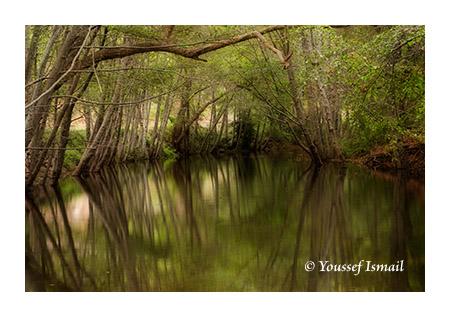
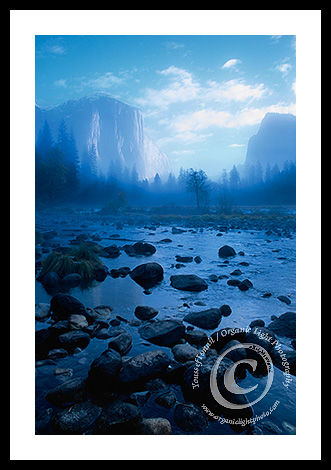
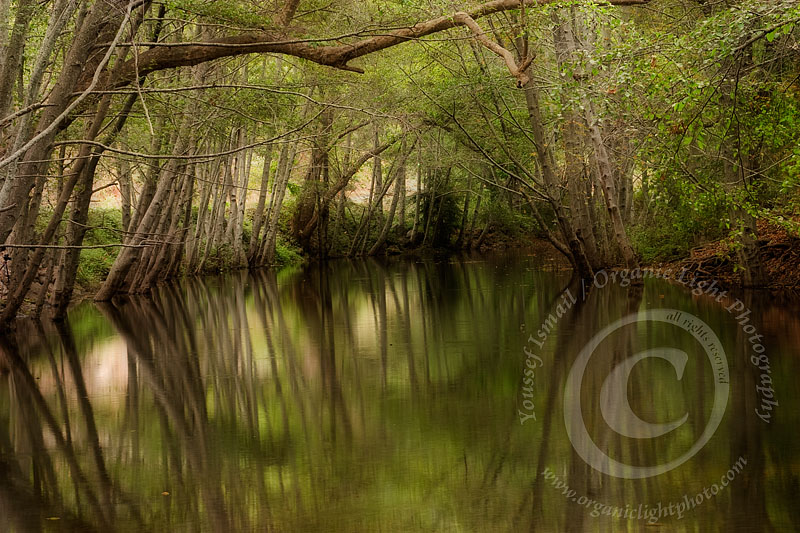
Reflection of trees in the Big Sur river


Four nights ago we entered into a special month, the month of Ramadan.  For close to 1/4 of the world’s population, this is a month of worship, a month of struggle and a month of reflection.  Prayer and devotional recitation of the Quran increase throughout the day but especially at night, and sometimes well into the wee hours of darkness while the world sleeps.  For the entire month, Muslims abstain from eating any food or drinking anything as well as abstaining from any marital relations with spouses during daylight hours, – these being the outward acts of fasting.

But fasting has an internal aspect as well, one that requires a person to reflect on one’s own condition.  Reflection and introspection are an important part for anyone who is on a path of self-improvement.  We suffer greatly as a species when we fail to reflect upon our actions as a whole.  If we stop and just realize what it is we are doing day to day I think we would be shocked.  If we are not making head way to higher states of existence then we are falling back.  There is no standing still.  For most people, they never act in any manner that is higher than any other animal that populates the Earth.  We wake, defecate, urinate, ingest food, copulate and fall asleep again.  Now that seems harsh on my part to say such a thing of my fellow humans, but in essence I do just the same, in fact we all – animals included – all fall back to this very basic common thread of existence.  However I don’t think that that is all life has to offer us.  I don’ think that this is all we are supposed to do in this life.  It most definitely is not the state that I want to exist at. Continue Reading »
Leave a Comment: Comments (4)

Ramadan 1430 Begins

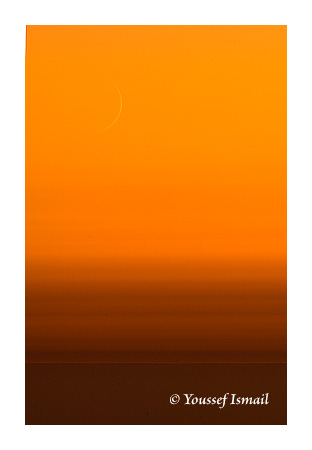
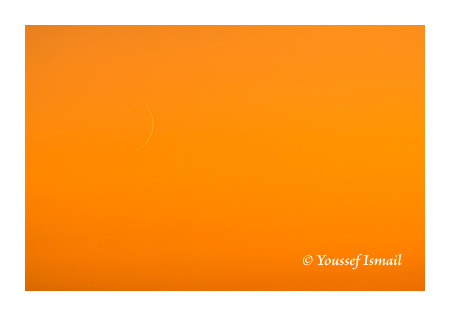
Ramadan Mubarak to all!  This evening August 21st, 2009 at 8:06 pm PDT the new crescent moon of Ramadan 1430, was sighted by a group of over 30 men and women, not counting the numerous children as well at Russian Ridge Open Space Preserve, just west of Palo Alto, CA in the Santa Cruz Mountains.  We had clear skies with some dark thick marine layer atmospherics close to the horizon.  It was a fine crescent that was about 3.5 degrees in altitude above the horizon and at a true azimuth of 265 degrees.

The group of sighters started out at about 20 people and over the next 15 minutes it grew to well over 35 people.  As the evening progressed everyone became quite joyful that the Blessed Month of Ramadan was upon us.  As the moon approached the horizon, we packed up and headed off into the night with the intention of commencing our Fast for the next 29 or 30 days, until we see the next new moon.  So Congratulations to all for having another opportunity to benefit from Ramadan.  May all your prayers and fasting be accepted this month.

Leave a Comment: Comments (7)

30 Days

Another month has gone by.  The new moon this time around met with the sun and blocked her out, completely for nearly 6 minutes all across Asia.  The longest total solar eclipse that the Earth will see for the next 123 years!  If you missed it, like I did, oh well, I guess we will have to figure out how to live another 123 years.

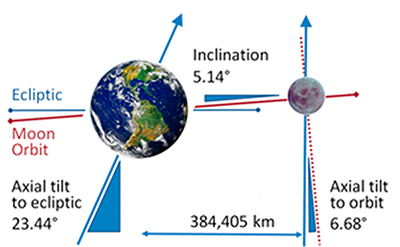
However, every month, the possibility for either a solar or lunar eclipse is there.  At each new moon, the Moon comes in between the the Sun and the Earth, that is why we lose sight of the Moon for a couple of days as it passes in front of the Sun.  At each full moon, there is a possibility of a lunar eclipse as the Earth comes in between the Sun and the Moon.  The reason we do not have two eclipses each month is that the Moon’s orbit around the Earth is not in the same plane as the orbit of the Earth around the Sun.  The graphic below should help in clarifying that.

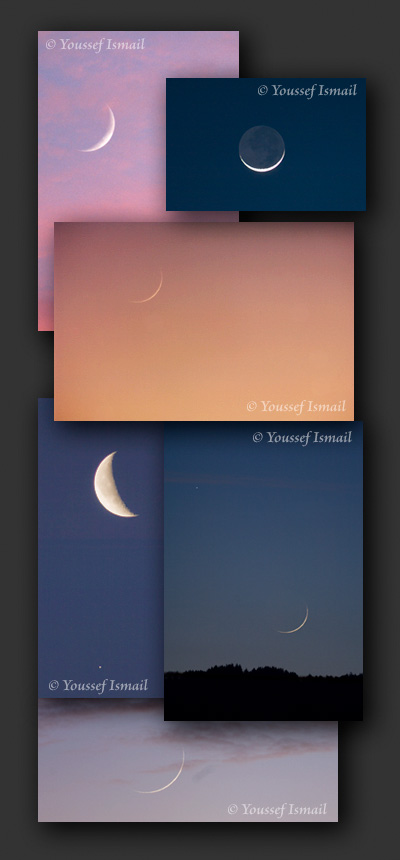
Only when all three bodies line up perfectly on the ecliptic will an eclipse occur.  They are not hard to predict, but they also do not occur all that frequently.  However when an eclipse does occur, it is a big deal and many cultures have placed significance in its occurrence.  But what goes almost un-noticed month after month is the emergence of a new moon a day or so after conjunction.  The beauty and subtlety of the new moon is something that words fail to convey.  It needs to be experienced to really be appreciated.  What is wonderful is that we see twelve new moons every year, so your chances of seeing one are much better than that of an eclipse, and given the conditions, the display is just as impressive.

Shabaan 1, 1430

Sha'baan 1, 1430

A few days ago, a day after the big solar eclipse actually, the new crescent moon made its appearance once more.  Surely its significance was “eclipsed” by the Solar eclipse itself, but it ushered in the Islamic month Sha’baan, known as the Month of the Prophet Muhammad, peace be upon him.  It is the month that proceeds the month of mandatory fasting for the Muslims, the month of Ramadan, and it is a month preparations – both physical and spiritual.

Great anticipation builds in the Muslim world once the moon of Sha’baan is sighted, for in 30 days worldly pleasures take a back seat for an entire month. Eating, drinking and marital relations come to a screeching halt during daylight hours and at night, the hours are spent in spiritual endeavors from reciting the melodic verses of the Quran in Arabic as in the first chapter Al-Faitha ~ The Opening to standing in prayer, sometimes for up to three or more hours!  All with the intention of establishing a connection and closeness to the Creator and Lord of our world.  So as this month is whittled away by time and we approach the next new moon it will have immense significance to 1.6 Billion people around the world.  And although the heavens will not put on a show as grand as a total solar eclipse, it ushers in a month long exercise that eclipses most others.

Peace to you all.

~ Youssef

Leave a Comment: Comments (6)

Full Of Light

The world is full of light.  Blink and you might just miss it.  It is all around us. It interacts with us.  It shows us the way and brings us information and messages which we decipher into understandings.  Its source – innumerable physically.  Some so far away we don’t know if they still exist.  Some so close, the Sun, that what arrives here left only 8 minutes ago.  When we see its light, it is the past.   For at the very instant that a message of light appears to our eyes, the Sun has already moved to a new spot in the sky.

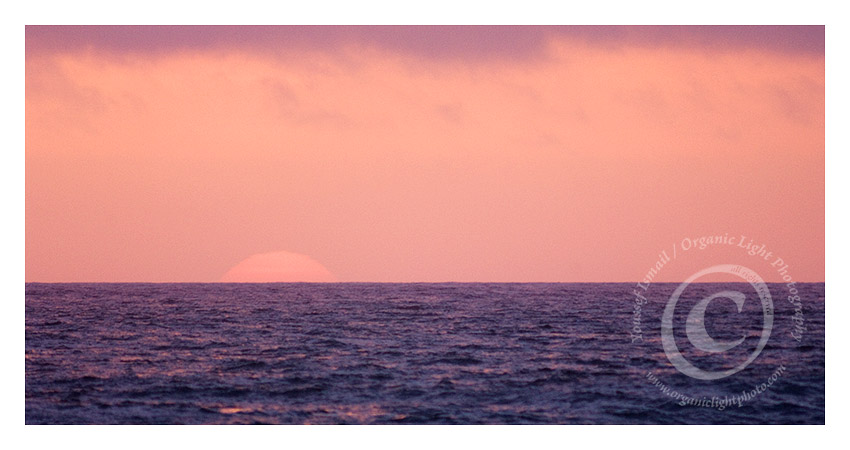
What we see in the sky is the past.  The sun on the horizon is not really there, as it has already set 8 minutes ago.  The world is full of Light, blink and you just might miss it – I did say that right?

Leave a Comment: Comments (3)

New Photos Released

Six new photos have been released on the Organic Light Photography website. 

The website has also been updated with a new feature that allows you to see the photos super-sized!  Just click on the “details” button below each individual photo in the gallery pages to see them BIG!  The feature is not available for every photo on the website but over time more and more photos will get updated.  The detail of Large Format film is astounding and can only be appreciated in large images.  The photos are even better in person as 16 x 20 inch enlargements or bigger.  Visit an upcoming show to see them.

Enjoy.

Leave a Comment: Comments (3)

From Russia with Color Photographs

The following link to The Empire That Was Russia website was sent to me by a friend earlier today.  It is pretty amazing to see real color photographs of Russia and its people from 110 years ago!  Check out the link on the home page on Making Color Images in particlular.  It describes the process of how the photographer Prokudin-Gorskii used to make them.  That process gave birth many years later to the Kodak Dye Transfer Process that is described by one of my mentors, Charles Cramer, on his website.  These old techniques were revolutionary in the imaging world. 

The color separation method of course is still used in the offset CMKY printing press industry that I described in the 2009 Calendar Goes to Press article.  Each of the four plates that go into the press are color separations like in the dye transfer process – Cyan, Magenta, Yellow and blacK – CMYK.  When people today balk about a photograph being “photoshopped” I think they really need to look at the history of image making in general to understand that what the camera captures, and what gets printed to paper and what our eye originally saw are very different. 

As photographic artists we know that what the camera gives us is such a pale comparison to what we actually saw that it is at times disheartening.  Sometimes we can compensate for the shortcomings of the camera in the field.  Sometimes it is in the wet darkroom or in the digital darkroom using software like Photoshop.  And then sometimes there is nothing we can do to salvage an image to represent what we saw.  There are manipulations every step of the way.  In the end however, if we can convey to our audience even a sliver of the experience we had at the time we photographed the scene then we have been sucessful.  So go out and bring back some experiences.

These old processes make me feel like experimenting.  Now where is my old black and white filter set….

Leave a Comment: Comments (0)

Terrestrial Astro Photography – The Moon

A new special workshop is being offered on how to find and photograph the Moon, and in particular, the new crescent moon.  To find out more information and to reigister check the Workshop Page on the Website and Register Today!  Only 19 days left before the next new moon!

Many Moons Ago

Many Moons Ago

Leave a Comment: Comments (0)

Rahima Foundation Calendar

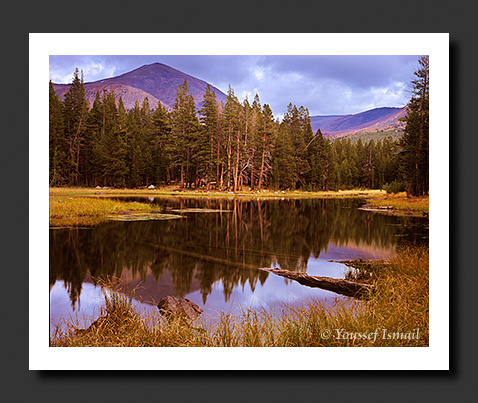
The 2009 – 1430/1431 Rahima Foundation Calendar will be featuring the Organic Light Photograpy photo Calm Tarn shown below.

Cam Tarn

Cam Tarn

This will be the 10th consecutive year that Rahima Foundation has chosen one of Organic Light’s photos exclusively for its calendar. Rahima Foundation is a local non-profit food bank in Santa Clara County that partners with Second Harvest Food Bank in San Jose, CA. It has been serving the the poor and needy since 1993 with food and financial aid for medical and basic utilities and other need-in-kind services. It also provides education scholarships to needy graduating high school students to help them realize their dream of going to college. It is a top rate organization and one that I am proud to be a supporter of. Visit their website and consider making a donation. They really need the help in helping the poor – now more than ever.

Peace – Youssef

Leave a Comment: Comments (0)

Speaking Softly

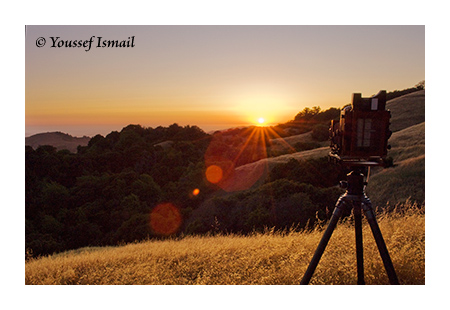
Photography is an amazing medium to work in.  It takes planning.  Choosing a location is always a gamble.  Conditions change every moment.  The light, the very thing that is worked with, is a living thing that interacts with everything it touches, and yet you can’t touch it, hear it, smell it or taste it and for that matter you can’t see it either until it interacts with something.  I enjoy the light.  I chase after it as often as I can.  Using a big camera, like the 4×5, takes a considerable amount of work.  It’s fairly heavy and schlepping it around can be a job.  It is a slow camera to use.  It takes time to set it up, compose with it, focus it and even photographing with it as shutter times are usually on the slow end requiring a tripod.  Once it is setup, you have an investment in time involved that you want to capitalize on so you sit there and wait for the event you came to capture and hope it was all worth it.  It is very different than a digital camera or even a smaller format film camera.

Russian Ridge

Russian Ridge


With that big camera, you wait for the light to come to you rather than you trying to capture the light as it elusively slips by.  Smaller cameras on the other hand allow mobility and spontaneity.  They allow one to capture that decisive moment before it slips away.  And I think that is what has made small camera photography so popular and special, it allows us to capture that “Kodak Moment”.  Even though some of the best photographs made by some of the best photographers in the world were done with a 4×5, there is no denying the versatility and popularity of the small camera.

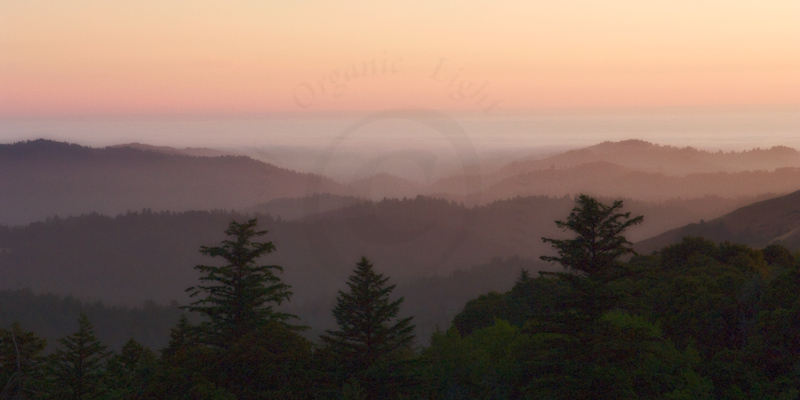
As I waited that evening for the new crescent moon to appear, I was glad to have a digital camera with me as well.  It not only allowed me to capture and share the new moon in the previous post the same night, but also allowed me to capture the subtleties of light that played in the fog mixing into the coastal mountains.

Softly Spoken

Softly Spoken

Yes large format photography is wonderful and becoming more unique.  It still allows the most stunning prints to be made.  It slows the photographer down in the whole process and, by necessity, forces the photographer to become part of the scene before it is captured.  But with both formats on hand, while waiting for the moment to trip the 4×5 shutter, the smaller format allows me to capture everything that is going on around me.  Do the smaller images compare in quality delivered from the 4×5?  No.  But none the less, words spoken softly can still have more impact than saying nothing at all.  And when what you say is said with light, you’d better have a way to say it.

Leave a Comment: Comments (0)

Rajab 1430 Begins

Rajab Hilal 1430

Rajab Hilal 1430

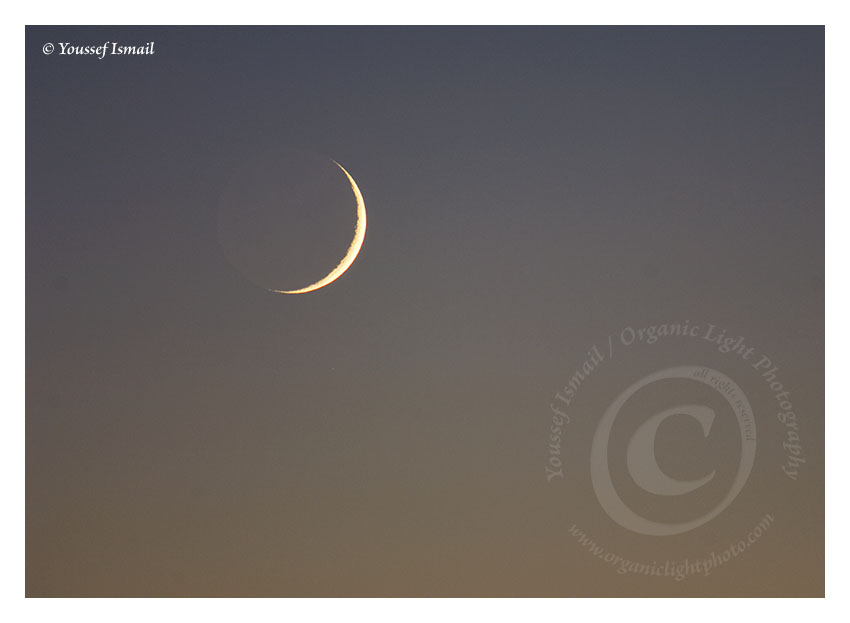
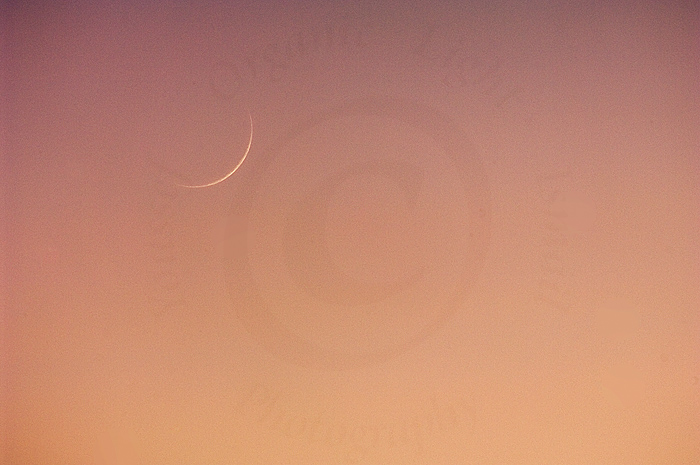
The new crescent moon (or Hilal in Arabic) of the 7th month of the Islamic Calendar, known as Rajab, was sighted this evening at 8:40 pm PDT from Russsian Ridge Open Space Preserve in the San Francisco Bay Area.  It was a perfect afternoon with subtle but stunning colors and atmospherics.  For moons, it just does not get better than this one.  More on the afternoon preceeding this photo in a later post.  Enjoy!

Leave a Comment: Comments (1)

« Previous PageNext Page »